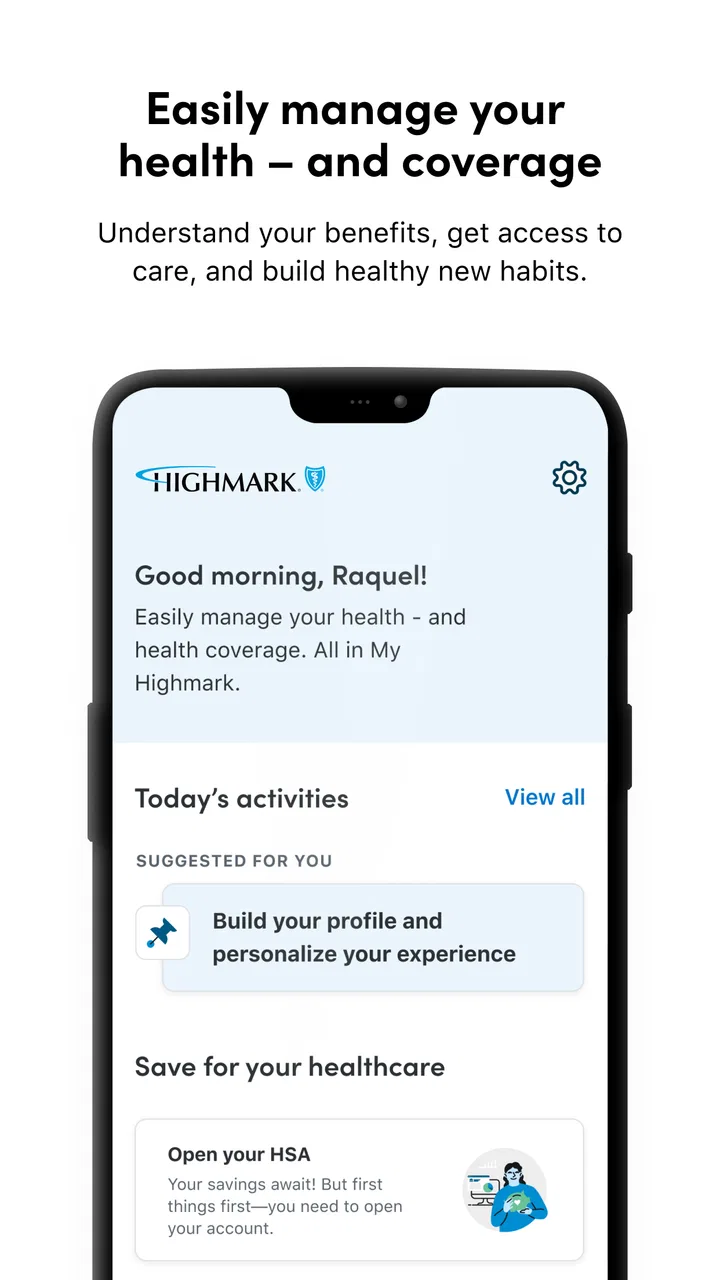
My Highmark
- 3.8
- Rating
- 100.00K
- Installs
- Free
- Price

 Analysis by App-foxy
When health insurance information is spread across cards, letters, provider offices, and separate phone calls, even a simple question can become surprisingly time-consuming. I approached My Highmark as a practical medical benefits app rather than as a general wellness tool: its value depends on how quickly it helps me move from a health-related question to the right benefit or support channel. Developed by Highmark Inc., it is free and available to everyone by age rating, although the usefulness of the account naturally depends on having a compatible Highmark relationship.
My first impression is that this is an administrative companion, not an app for diagnosing symptoms or replacing a clinician. That distinction matters. If I need urgent medical advice, I would not open it first. If I need to understand my coverage, manage health and benefits information, or prepare for a conversation with a provider, it makes much more sense. The app has reached over one hundred thousand installs and holds an average rating of 3.9 from roughly four thousand six hundred ratings, which suggests a useful but not universally smooth experience.
From a health question to a practical next step
I use this section to focus on the moment a health or billing concern turns into a concrete task: what information to gather, what to check first, and when to ask a person to clarify the answer. A useful habit is to keep the exact wording from a bill or appointment note in front of me, so I can frame the question precisely rather than rely on memory. From there, the next step is getting the account ready before I need it in a hurry.
You May Also Like

 Blood Strike: 2.5 Anniversary
Blood Strike’s Loadouts Turn Every Drop Into a Tactical Gamble
A close look at Blood Strike’s custom loadouts: how fast access to signature weapons reshapes its battle royale rhythm, rewards preparation, and narrows the gap between fights.

 Pandora - Music & Podcasts
Pandora’s Music Is Easy to Start, but Harder to Recover
Pandora’s strength is its low-effort path from a seed to a station. Its weak spot is how much confidence it asks you to place in connection, setup, and quiet recovery.

 8 Ball Pool
 Is Built on Rivalries, Rematches, and Routine
A close look at the rivalries, rematches, shared routines, and unanswered safety questions that turn a quick pool match into a persistent mobile community.

 Samsung Music
’s Quiet Strength Is Playing What You Already Own
Its reach comes less from spectacle than from dependable access to a personal library. That simplicity is both the app’s strongest retention engine and its ceiling.

 AccuWeather: Weather Radar
AccuWeather Review: A Quick, Clear Forecast for Everyday Decisions
For everyday plans, the best forecast is the one you can understand quickly. AccuWeather makes rain timing, radar, and local conditions easy to act on, with a few trade-offs.

 Hill Climb Racing
Why Hill Climb Racing Still Turns Crashes Into One More Run
A tiny car, a bumpy hill and one more upgrade: Hill Climb Racing keeps resurfacing because its simple chaos makes every near-miss feel personal.
More From Our News Desk
View All News


Starting with the situation that brought me there
The most realistic way to use My Highmark begins with a small problem: I am about to schedule care, I have received a medical bill, I want to check something connected with my benefits, or I simply need to get organized before contacting a provider. In each case, the important starting point is not the app itself but the information I already have. I would keep my insurance details, appointment information, and any relevant bill or message nearby rather than expecting the app to explain everything without context.
That preparation makes a difference because benefits language can be easy to misread. A coverage question may involve the service, the provider, the location, and the specific plan. An app can help me reach the relevant information, but it cannot turn an unclear medical or billing situation into a simple answer if the original details are incomplete. I found it more useful when I treated it as a place to verify and organize information, not as an automatic decision-maker.
The app’s store summary, “Manage your health & benefits,” is a concise description of its role. It is not promising a social health community, a medication tracker, or a fitness dashboard. That narrower purpose is actually a strength for people who want insurance-related tasks in one mobile starting point. It is less appealing if I am looking for daily health coaching or a broad collection of medical education tools.
Setting up the first handoff
The first handoff is between me and the account. I need to get through the sign-in or account-access process before the app can become genuinely useful. I would recommend doing that before an appointment or billing deadline, when there is time to deal with an old password, an account mismatch, or any verification step that requires attention. Waiting until I am standing at a reception desk is the kind of avoidable friction that can make an otherwise helpful app feel unreliable.
Once access is available, I would spend a few minutes learning where the important benefit information lives instead of opening the app only during a stressful moment. This is one of the less obvious advantages of a benefits app: familiarity changes the quality of the conversation I can have later. If I already know where to look, I can check details before calling, describe the issue more clearly, and avoid asking a provider’s front desk to investigate something that belongs with the insurer.
I also would not assume that a screen inside the app is the final word on every healthcare decision. For a planned service, I would compare what I see with the provider’s instructions and ask the insurer or provider to clarify anything that affects cost or eligibility. The app can improve the handoff, but the human parties still own the final explanation.
Moving through benefits information
My preferred workflow is to begin with the specific task rather than browsing aimlessly. If I am preparing for an appointment, I would first identify what I need to know: whether the provider is appropriate for my plan, what information I should bring, or which benefit area relates to the planned care. If I am reviewing a bill, I would keep the bill open beside the app and compare names, dates, and service descriptions carefully instead of relying on memory.
This side-by-side approach is useful because insurance terminology often looks familiar while carrying a precise meaning. A phrase that sounds like approval may only be a general benefit description. A provider’s assumption about coverage may also differ from the plan’s explanation. My Highmark is best used to narrow the question and point me toward the next conversation, not to encourage a rushed interpretation of a complicated claim.
A practical tip is to write down the exact question before contacting support. “Why is this expensive?” is difficult for anyone to answer quickly. “I need help understanding this service and whether the provider information matches my benefit details” gives the handoff a clearer starting point. The app becomes more valuable when it helps me arrive at that level of precision.
Handing information to providers and support
Healthcare rarely ends inside one app. The next handoff may be to a doctor’s office, a pharmacy, a billing department, or Highmark support. Each party sees a different part of the situation. A provider may know the clinical service but not the complete benefit context. A billing office may see a charge but not understand why I expected it to be covered. The insurer may need the exact service and provider details before explaining the benefit.
That is why I would use the app as a preparation tool before making a call. I would gather the relevant account information, note the wording that seems unclear, and keep the provider’s details available. This reduces the familiar cycle of repeating the same story to several people. It does not eliminate the handoff, but it can make the handoff cleaner.
There is also a useful trade-off here. A mobile account is faster than searching through paper documents, but a small screen is not always the best place to study a complex explanation. If I need to compare several lines of a claim or explain details to another person, I may prefer a larger screen, a saved document, or direct support. The app is convenient for reaching information; convenience should not be confused with complete clarity.
What a successful result looks like
For me, a successful outcome is not necessarily solving every issue without human help. It is reaching the correct next step with less uncertainty. That might mean knowing what to ask a provider, understanding which benefit area applies, or being ready to speak with support using the right account context. In health administration, preventing one wrong call or one misunderstood assumption can be a meaningful result.
Consider a common scenario: I receive a bill after planned care and do not recognize why the amount differs from what I expected. I open My Highmark, review the relevant benefit information, compare it with the bill, and identify the part that still needs explanation. I then contact the appropriate party with a focused question rather than asking everyone involved to start from zero. The app has not replaced the billing office or insurer representative, but it has helped me prepare a better handoff.
Another scenario is preparing for a new provider visit. Instead of arriving with only a vague idea of my coverage, I use the app beforehand to review the information connected with my benefits and write down anything that needs confirmation. That can make the check-in conversation shorter and reduce the chance of discovering an administrative problem at the worst possible moment.
Where the workflow breaks down
The main weakness is that healthcare administration is complicated even when the interface is sensible. If the information I need is buried in unfamiliar terminology, I may still leave with questions. An app cannot guarantee that a provider’s interpretation, a claim’s status, and my personal expectation will line up perfectly. I would be cautious about treating a convenient display as a promise about final out-of-pocket responsibility.
Access friction is another concern. Any account-based benefits tool becomes less useful when I cannot sign in, when my information is not immediately available, or when I need to switch between the app and another source to understand the situation. This is why I would set it up during a calm moment and keep a backup plan for urgent or time-sensitive matters. For an appointment happening soon, I would not rely on a first-time login.
The app is also not the right choice for every health task. Someone seeking symptom assessment, exercise guidance, medication reminders, or a general medical reference will probably find a dedicated app more appropriate. I would also skip it as my primary tool if I do not have a relevant Highmark account or if my main need is detailed clinical communication with a care team. Its focus is benefits management, and that focus should guide expectations.
How it compares with paper, phone calls, and broader health apps
Compared with paper insurance documents, My Highmark is more convenient when I need information while away from home. I do not have to remember which envelope contains a particular detail, and a phone is usually closer than a filing cabinet. The compromise is that paper can be easier to annotate, compare, or share across a table. For a complicated case, I still like having a written record even when the app is my first stop.
Compared with calling support immediately, the app can save time by helping me frame the issue first. A phone representative may still be necessary, especially when the question involves a specific claim, a disputed charge, or an explanation that requires personal account review. The best combination is often app first, focused call second, rather than app instead of every human interaction.
Compared with broad health apps, this one is more specialized. A wellness platform may offer habits, exercise, or symptom content, while My Highmark is aimed at the administrative side of care. I prefer that specialization when I am dealing with benefits. I would not install it expecting a complete personal health hub.
Details that affect the decision to install
My Highmark is free, which removes the usual subscription question and makes trying it relatively low-risk for eligible users. It is rated for everyone, and the minimum operating system is Android 8.1, so people with older devices should check compatibility before planning around it. The current version is 1.81.0-playstore, a detail worth checking when troubleshooting because an outdated installation can create a different experience from the current release.
The app was released on December 21, 2022, and its presence on the platform has given it time to build a visible user base. The average rating is 3.9, based on about four thousand six hundred ratings, with roughly five hundred eighty-six written reviews. I read that overall signal as “useful for many people, but expect occasional friction,” rather than as a guarantee that every account or task will feel effortless.
One subtle point is that a benefits app’s value can vary more by personal plan and situation than by the app’s general reputation. Two users may open the same product with very different questions and available information. I would judge it by whether it helps with my actual Highmark workflow: checking benefits, preparing for care, and handing a precise question to the right person.
My recommendation after following the full workflow
I recommend My Highmark to Highmark members who want a mobile starting point for health and benefits administration. It is especially useful if I regularly need to prepare for appointments, understand coverage-related information, or keep my questions organized before contacting a provider or support representative. The strongest benefit is not that it magically completes every task; it is that it can make the path from uncertainty to a sensible next step more orderly.
I would approach it with realistic expectations. Keep provider and billing documents nearby, verify confusing details rather than guessing, and do the initial account setup before an urgent appointment. If the issue is clinical, urgent, or too complex to interpret from a mobile screen, move promptly to the appropriate professional or support channel.
For me, the app succeeds when it acts as the first link in a chain: my question goes in, relevant benefit information helps shape it, and a provider or Highmark representative receives a clearer request. That makes it more practical than a paper-only routine, while still acknowledging that insurance decisions often require human explanation. If that is the kind of help you need, this free medical app is worth trying; if you want a general wellness or medical advice tool, I would choose something built for that job instead.
FAQs for My Highmark
01What is My Highmark, and what can I do with it?
My Highmark is a comprehensive app designed to provide users with access to health and wellness resources, including personalized health tracking, appointment scheduling, and access to medical records. Users can manage their healthcare needs, find doctors, and access a variety of wellness programs and benefits directly through the app.
02Is My Highmark available for both Android and iOS?
Yes, My Highmark is available for download on both Android and iOS platforms. Users can easily find the app on the Google Play Store for Android devices and the Apple App Store for iOS devices, ensuring accessibility regardless of your smartphone preference.
03Are there any costs associated with using My Highmark?
My Highmark is generally free to download and use. However, some features might require a subscription or membership, depending on your healthcare plan with Highmark. It's important to check if any additional services incur costs to avoid unexpected charges.
04How secure is my personal information on My Highmark?
My Highmark prioritizes user privacy and employs advanced security measures to protect personal data. The app uses encryption protocols to safeguard your information and complies with healthcare regulations like HIPAA to ensure your medical records and personal details are securely managed.
05What should I do if I encounter issues while using My Highmark?
If you experience any issues while using My Highmark, you can contact their customer support directly through the app. Additionally, the app provides a comprehensive help section with troubleshooting tips and FAQs to resolve common problems efficiently.
Pros
- User-friendly interface for easy navigation.
- Comprehensive tracking of fitness goals.
- Personalized workout plans available.
- Seamless integration with wearables.
- Regular updates with new features.
Cons
- Limited free features; subscription needed.
- Occasional syncing issues with devices.
- Notifications can be overwhelming.
- In-app ads disrupt user experience.
- Requires internet connection for full use.

My Highmark
Gallery